
Meeting Seshadri Swami
Seshadri Swami, another great sage living at Arunachala, recognized the young Venkataraman's spiritual state and protected him during his early days at the mountain.
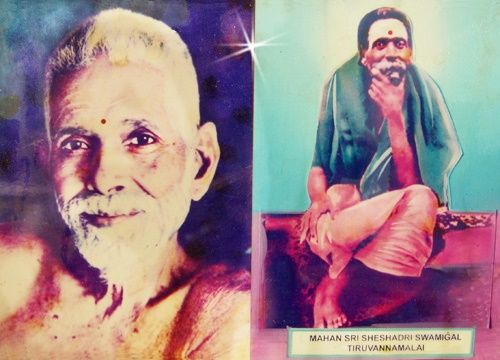
Seshadri Swami, another great sage living at Arunachala, recognized the young Venkataraman's spiritual state and protected him during his early days at the mountain.
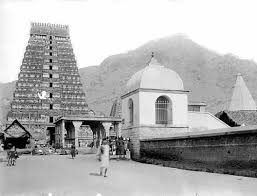
The first days at Arunachaleswara Temple were marked by complete absorption in the Self. The young sage remained motionless, unaware of his body or surroundings.
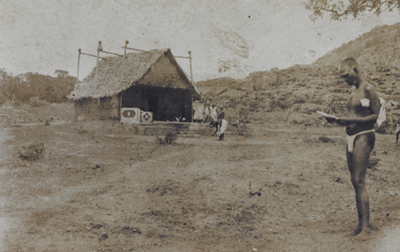
Alagammal, Ramana Maharshi's mother, attained complete Self-realization and passed away in a state of liberation. Her samadhi became the site of Ramanasramam.
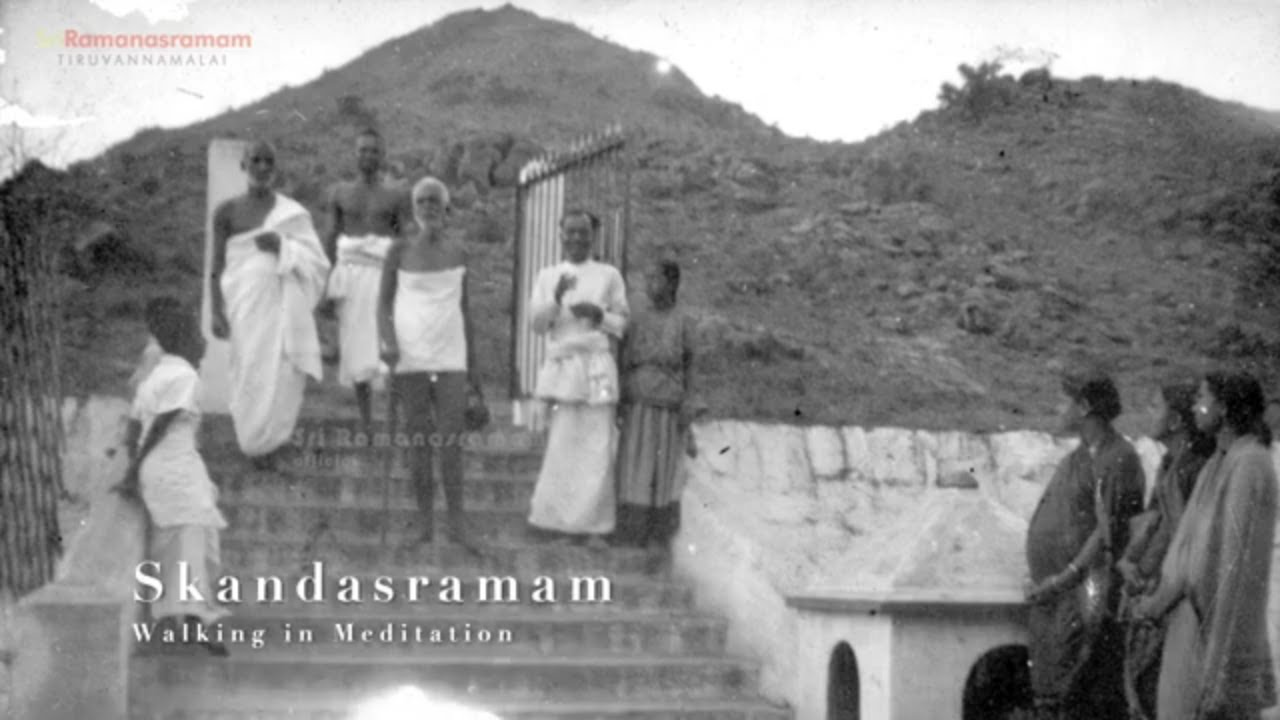
After moving to Skandashram, Ramana Maharshi lived with his mother and close devotees in a simple, spiritual environment that became a model for ashram life.
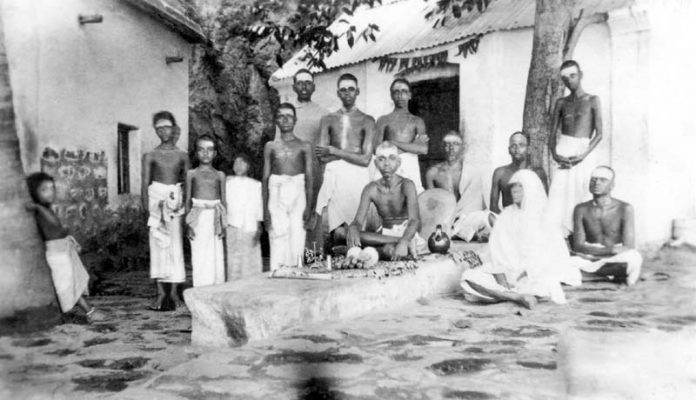
Ramana Maharshi's mother, Alagammal, came to Arunachala after hearing about her son's transformation. She too would eventually attain Self-realization.
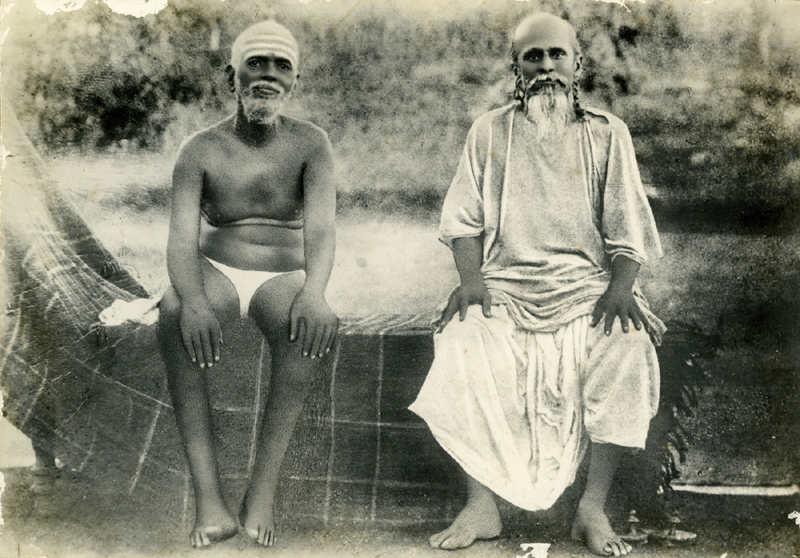
Ganapati Muni, a great scholar and poet, came to the young sage and recognized him as Bhagavan Ramana Maharshi. This meeting was significant for both.
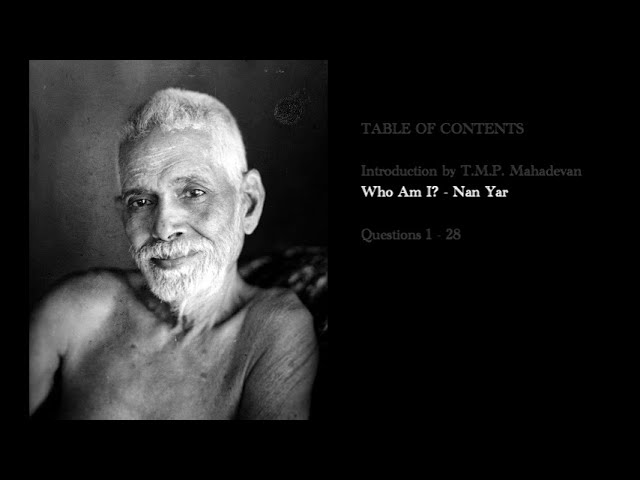
When devotees first began asking questions, the young sage would answer with simple, direct words that pointed always to the Self. These early dialogues laid the foundation for his teachings.
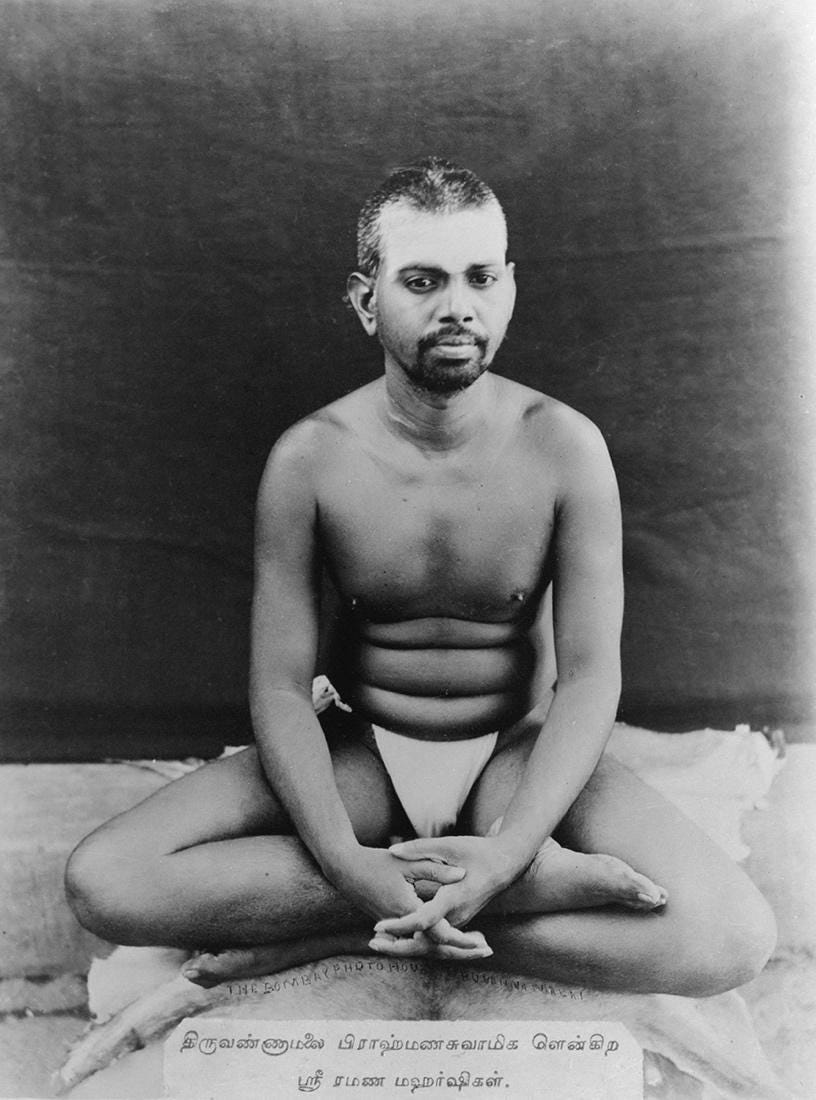
The name Ramana was given to the young sage by devotees, though he himself had no interest in names or identities. He was simply the Self.
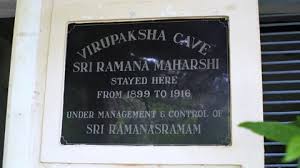
Virupaksha Cave became the young sage's first proper abode on Arunachala. Here, he would spend several years in deep meditation, establishing his life as a realized sage.
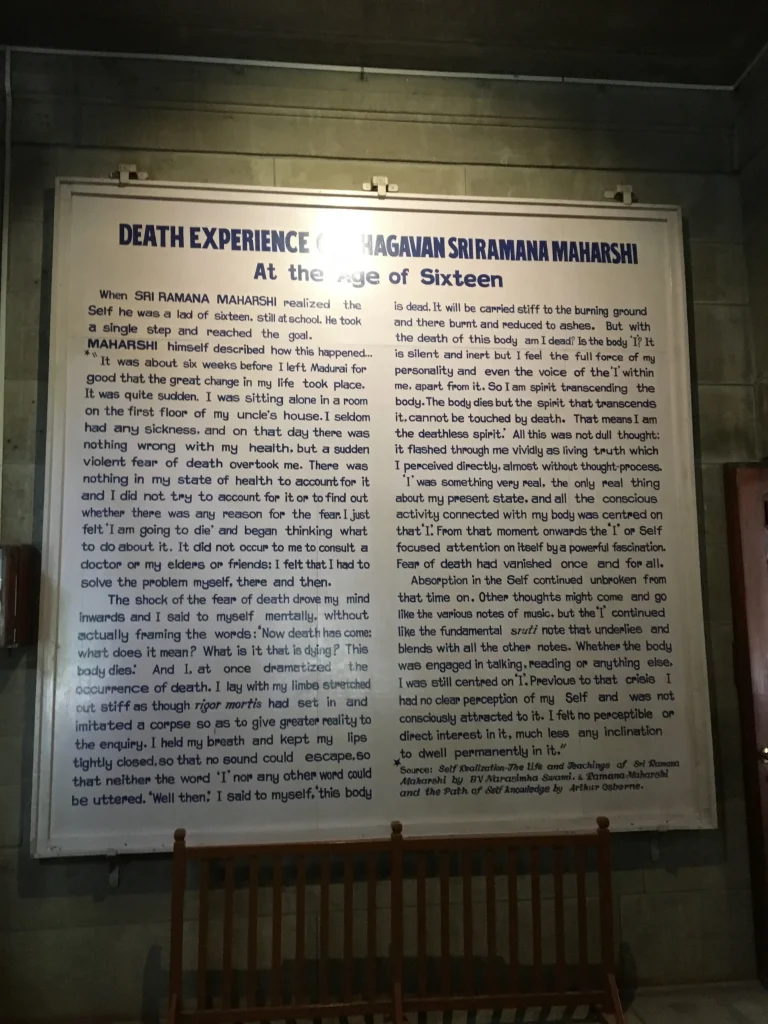
At the age of sixteen, Venkataraman experienced a profound transformation that would change his life forever. While sitting alone in his uncle's house in Madurai, a sudden and intense fear of death overwhelmed him.
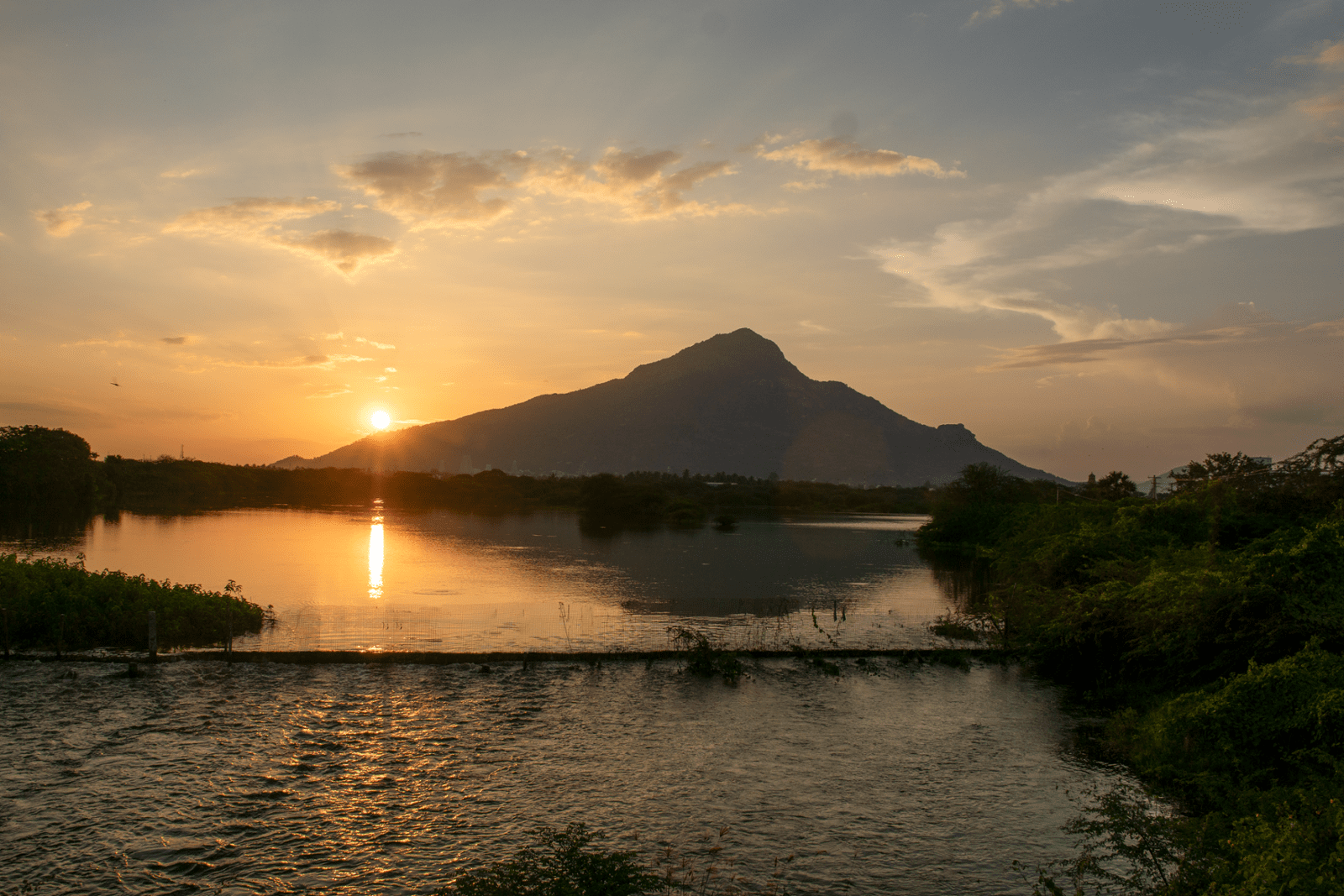
Leaving behind his family and worldly attachments, the young Venkataraman felt an irresistible pull toward the sacred mountain of Arunachala. Without informing anyone, he embarked on a journey that would lead him to his final abode.
Venkataraman was born in the small village of Tiruchuzhi in Tamil Nadu. His early years were marked by an ordinary childhood, though signs of his spiritual nature were already present.
Venkataraman's school years in Dindigul were unremarkable academically, but they laid the foundation for the profound spiritual transformation that was to come.
The moment that changed everything began with an intense fear of death. Instead of running from it, the young Venkataraman faced it directly, leading to Self-realization.
Without telling anyone, the young sage left his home, leaving behind only a brief note. This act of complete surrender marked the beginning of his life as a renunciate.
The journey from Madurai to Tiruvannamalai was not just a physical journey, but a spiritual pilgrimage that would culminate in the young sage's arrival at his destined abode.
From the temple, the young sage moved to Patala Lingam, an underground shrine, where he continued his deep absorption in the Self, away from the distractions of the temple.
The first devotees who came to the young sage at Virupaksha Cave were drawn by his silent presence and the profound peace they experienced in his company.
Though the young sage was born in Tamil Nadu, he had to learn to read and write Tamil properly to communicate with devotees and to compose his spiritual works.
Ramana Maharshi composed beautiful hymns to Arunachala, expressing his love and devotion to the sacred mountain that was both his Guru and his abode.
After his mother's passing, Ramanasramam was established at the site of her samadhi. This would become the permanent home of Ramana Maharshi and a center for spiritual seekers.
As word spread about Ramana Maharshi, Western seekers began to arrive at Arunachala. Paul Brunton was among the first, and his book introduced the sage to the Western world.
Life at Ramanasramam followed a simple, regular routine centered around meditation, self-inquiry, and service. The sage's presence was the heart of this routine.
In his final years, Ramana Maharshi continued to teach through his presence, even as his body showed signs of illness. His realization remained unshaken until the end.
Even in his last days, Ramana Maharshi remained completely established in the Self. His presence continued to radiate peace, and he continued to guide devotees until the very end.
After Ramana Maharshi left the body, his teachings continued to spread throughout the world. His legacy lives on through his words, his presence, and the countless seekers he has inspired.
Sundaram Iyer, Ramana Maharshi's father, was a respected lawyer who instilled values of honesty and integrity in his children. Though he passed away when Venkataraman was young, his influence remained.
When Venkataraman left home, his brother Nagaswami searched for him but could not find him. Years later, he would come to understand and accept his brother's spiritual path.
During his journey to Arunachala, Venkataraman removed his sacred thread, symbolizing his complete renunciation of all social and religious identifications.
The thousand-pillared hall of Arunachaleswara Temple was where the young Venkataraman first sat in deep meditation upon arriving at Tiruvannamalai. This hall became a sacred space for his initial absorption in the Self.
The method taught by Ramana Maharshi is deceptively simple yet profoundly powerful: continuously ask 'Who am I?' and trace the source of the 'I' thought back to its origin in the Heart.
Many visitors came to Ramana Maharshi seeking answers to their questions, but often found that his silence spoke more powerfully than any words. His presence itself was the teaching.
The question 'Who am I?' is not just a philosophical inquiry, but a direct method to realize the Self. Ramana Maharshi taught this as the simplest and most direct path.
Ramana Maharshi taught that the mind is nothing but a collection of thoughts, and the root of all thoughts is the 'I' thought. When the 'I' thought is destroyed, the mind is destroyed.
Ramana Maharshi taught that the Heart is not the physical heart, but the spiritual Heart, which is the Self. It is the source of the 'I' thought and the abode of the Self.
Along with self-inquiry, Ramana Maharshi taught surrender as a path to Self-realization. Complete surrender to the Self leads to the same goal as self-inquiry.
The ego is the false identification with the body and mind. Ramana Maharshi taught that the ego must be destroyed through self-inquiry, revealing the true Self.
Ramana Maharshi taught that meditation should be on the Self, not on external objects. The best meditation is self-inquiry, which leads directly to the Self.
Ramana Maharshi taught that the world appears real only because of the 'I' thought. When the 'I' thought is destroyed, the world is seen to be an illusion, and only the Self remains.
Ramana Maharshi taught that both grace and self-effort are necessary for Self-realization. Self-effort opens the door, and grace enters.
Ramana Maharshi taught that the Guru is not separate from the Self. The Guru is the Self, and the Self is the Guru. The external Guru points to the internal Guru.
Ramana Maharshi taught that karma and destiny are real, but they affect only the body and mind, not the Self. The Self is beyond karma and destiny.
Ramana Maharshi taught that reincarnation is real, but it applies only to the body and mind, not to the Self. The Self is eternal and does not reincarnate.
Ramana Maharshi taught about the three states - waking, dream, and deep sleep - and how the Self is the witness of all three states, transcending them all.
Ramana Maharshi taught that the path of knowledge, or Jnana Yoga, is the direct path to Self-realization. Self-inquiry is the essence of the path of knowledge.
Ramana Maharshi taught that the path of devotion, or Bhakti Yoga, is equally valid and leads to the same goal. Surrender is the essence of the path of devotion.
Surrender means giving up the sense of doership and recognizing that everything happens according to the will of the Self. This complete surrender leads to Self-realization.
Ramana Maharshi emphasized the importance of continuous practice. Self-inquiry must be practiced constantly, not just during meditation, but throughout the day.
Ramana Maharshi taught about the obstacles on the spiritual path and how to overcome them. The main obstacle is the mind itself, which must be transcended through self-inquiry.
Ramana Maharshi taught that the goal of spiritual practice is not to achieve something new, but to realize what is already there - the Self, which is one's true nature.
Ramana Maharshi emphasized the simplicity of the path to Self-realization. The method is simple - just ask 'Who am I?' - but it requires sincerity and persistence.
Ramana Maharshi's teaching is universal, transcending all religions and philosophies. It points directly to the Self, which is the same in all.
Ramana Maharshi taught the direct path to Self-realization, without the need for intermediate steps or external aids. Self-inquiry goes straight to the source.
Ramana Maharshi taught that the Guru is essential for Self-realization. The Guru's role is to point the disciple to the Self and to remove the obstacles.
Ramana Maharshi's teaching has the power to transform lives. It has helped countless seekers realize the Self and find lasting peace and happiness.
Ramana Maharshi's teaching is timeless, as relevant today as it was when he first taught it. The Self is eternal, and the path to realize it is eternal.
Ramana Maharshi's teaching is practical and can be practiced in daily life. It does not require one to renounce the world or to live in isolation.
Ramana Maharshi's teaching is complete and covers all aspects of spiritual life. It provides both the method and the goal, the path and the destination.
Ramana Maharshi's teaching is marked by clarity and simplicity. He expressed the deepest spiritual truths in the simplest possible language.
Despite its simplicity, Ramana Maharshi's teaching has great depth. It addresses the deepest questions of human existence and provides the ultimate answer.
Ramana Maharshi's teaching is not just words, but a living transmission. His presence itself was the teaching, and it continues to inspire seekers today.
Life at Ramanasramam was marked by simplicity, devotion, and the constant presence of Ramana Maharshi. Daily Life at Ramanasramam was an integral part of this sacred environment.
Life at Ramanasramam was marked by simplicity, devotion, and the constant presence of Ramana Maharshi. The Meditation Hall was an integral part of this sacred environment.
Life at Ramanasramam was marked by simplicity, devotion, and the constant presence of Ramana Maharshi. The Library was an integral part of this sacred environment.
Life at Ramanasramam was marked by simplicity, devotion, and the constant presence of Ramana Maharshi. The Kitchen was an integral part of this sacred environment.
Life at Ramanasramam was marked by simplicity, devotion, and the constant presence of Ramana Maharshi. The Cowshed was an integral part of this sacred environment.
Life at Ramanasramam was marked by simplicity, devotion, and the constant presence of Ramana Maharshi. The Garden was an integral part of this sacred environment.
Life at Ramanasramam was marked by simplicity, devotion, and the constant presence of Ramana Maharshi. Morning Meditation was an integral part of this sacred environment.
Life at Ramanasramam was marked by simplicity, devotion, and the constant presence of Ramana Maharshi. Evening Satsang was an integral part of this sacred environment.
Life at Ramanasramam was marked by simplicity, devotion, and the constant presence of Ramana Maharshi. The Dining Hall was an integral part of this sacred environment.
Life at Ramanasramam was marked by simplicity, devotion, and the constant presence of Ramana Maharshi. Visitors from Afar was an integral part of this sacred environment.
Life at Ramanasramam was marked by simplicity, devotion, and the constant presence of Ramana Maharshi. The Ashram Routine was an integral part of this sacred environment.
Life at Ramanasramam was marked by simplicity, devotion, and the constant presence of Ramana Maharshi. Festivals at the Ashram was an integral part of this sacred environment.
Life at Ramanasramam was marked by simplicity, devotion, and the constant presence of Ramana Maharshi. The Ashram Animals was an integral part of this sacred environment.
Life at Ramanasramam was marked by simplicity, devotion, and the constant presence of Ramana Maharshi. The Ashram Children was an integral part of this sacred environment.
Life at Ramanasramam was marked by simplicity, devotion, and the constant presence of Ramana Maharshi. The Ashram Workers was an integral part of this sacred environment.
Life at Ramanasramam was marked by simplicity, devotion, and the constant presence of Ramana Maharshi. The Ashram Atmosphere was an integral part of this sacred environment.
Life at Ramanasramam was marked by simplicity, devotion, and the constant presence of Ramana Maharshi. The Ashram Buildings was an integral part of this sacred environment.
Life at Ramanasramam was marked by simplicity, devotion, and the constant presence of Ramana Maharshi. The Ashram Expansion was an integral part of this sacred environment.
Life at Ramanasramam was marked by simplicity, devotion, and the constant presence of Ramana Maharshi. The Ashram Today was an integral part of this sacred environment.
Life at Ramanasramam was marked by simplicity, devotion, and the constant presence of Ramana Maharshi. Preserving the Legacy was an integral part of this sacred environment.
Palaniswami was one of the many devotees who came to Ramana Maharshi and found transformation through his presence and teachings.
Ganapati Muni was one of the many devotees who came to Ramana Maharshi and found transformation through his presence and teachings.
Muruganar was one of the many devotees who came to Ramana Maharshi and found transformation through his presence and teachings.
Annamalai Swami was one of the many devotees who came to Ramana Maharshi and found transformation through his presence and teachings.
Papaji was one of the many devotees who came to Ramana Maharshi and found transformation through his presence and teachings.
Major Chadwick was one of the many devotees who came to Ramana Maharshi and found transformation through his presence and teachings.
Paul Brunton was one of the many devotees who came to Ramana Maharshi and found transformation through his presence and teachings.
Arthur Osborne was one of the many devotees who came to Ramana Maharshi and found transformation through his presence and teachings.
S. S. Cohen was one of the many devotees who came to Ramana Maharshi and found transformation through his presence and teachings.
Dilip Kumar Roy was one of the many devotees who came to Ramana Maharshi and found transformation through his presence and teachings.
Mouni Sadhu was one of the many devotees who came to Ramana Maharshi and found transformation through his presence and teachings.
Niranjanananda Swami was one of the many devotees who came to Ramana Maharshi and found transformation through his presence and teachings.
Chinnaswami was one of the many devotees who came to Ramana Maharshi and found transformation through his presence and teachings.
Kunju Swami was one of the many devotees who came to Ramana Maharshi and found transformation through his presence and teachings.
Lakshmana Swami was one of the many devotees who came to Ramana Maharshi and found transformation through his presence and teachings.
Viswanatha Swami was one of the many devotees who came to Ramana Maharshi and found transformation through his presence and teachings.
Sadananda Swami was one of the many devotees who came to Ramana Maharshi and found transformation through his presence and teachings.
Ramanananda Swami was one of the many devotees who came to Ramana Maharshi and found transformation through his presence and teachings.
Sundaresa Iyer was one of the many devotees who came to Ramana Maharshi and found transformation through his presence and teachings.
Nagamma was one of the many devotees who came to Ramana Maharshi and found transformation through his presence and teachings.
Many devotees experienced what they considered miracles in the presence of Ramana Maharshi. The Healing Touch was one such experience that demonstrated the power of the Self.
Many devotees experienced what they considered miracles in the presence of Ramana Maharshi. Materialization of Objects was one such experience that demonstrated the power of the Self.
Many devotees experienced what they considered miracles in the presence of Ramana Maharshi. Reading Thoughts was one such experience that demonstrated the power of the Self.
Many devotees experienced what they considered miracles in the presence of Ramana Maharshi. Knowing the Future was one such experience that demonstrated the power of the Self.
Many devotees experienced what they considered miracles in the presence of Ramana Maharshi. Protection from Danger was one such experience that demonstrated the power of the Self.
Many devotees experienced what they considered miracles in the presence of Ramana Maharshi. Curing Diseases was one such experience that demonstrated the power of the Self.
Many devotees experienced what they considered miracles in the presence of Ramana Maharshi. Material Needs Fulfilled was one such experience that demonstrated the power of the Self.
Many devotees experienced what they considered miracles in the presence of Ramana Maharshi. Spiritual Experiences was one such experience that demonstrated the power of the Self.
Many devotees experienced what they considered miracles in the presence of Ramana Maharshi. Visions of the Sage was one such experience that demonstrated the power of the Self.
Many devotees experienced what they considered miracles in the presence of Ramana Maharshi. Dreams and Guidance was one such experience that demonstrated the power of the Self.
Many devotees experienced what they considered miracles in the presence of Ramana Maharshi. The Power of Presence was one such experience that demonstrated the power of the Self.
Many devotees experienced what they considered miracles in the presence of Ramana Maharshi. Transformation of Devotees was one such experience that demonstrated the power of the Self.
Many devotees experienced what they considered miracles in the presence of Ramana Maharshi. The Ashram's Protection was one such experience that demonstrated the power of the Self.
Many devotees experienced what they considered miracles in the presence of Ramana Maharshi. Divine Interventions was one such experience that demonstrated the power of the Self.
Many devotees experienced what they considered miracles in the presence of Ramana Maharshi. The Eternal Presence was one such experience that demonstrated the power of the Self.
Arunachala holds a unique place in spiritual tradition. The Power of Arunachala reveals the deep spiritual significance of this sacred mountain.
Arunachala holds a unique place in spiritual tradition. Giri Pradakshina reveals the deep spiritual significance of this sacred mountain.
Arunachala holds a unique place in spiritual tradition. The Five Hymns reveals the deep spiritual significance of this sacred mountain.
Arunachala holds a unique place in spiritual tradition. The Significance of the Hill reveals the deep spiritual significance of this sacred mountain.
Arunachala holds a unique place in spiritual tradition. Arunachala as Guru reveals the deep spiritual significance of this sacred mountain.
Arunachala holds a unique place in spiritual tradition. The Sacred Geometry reveals the deep spiritual significance of this sacred mountain.
Arunachala holds a unique place in spiritual tradition. The Energy of the Mountain reveals the deep spiritual significance of this sacred mountain.
Arunachala holds a unique place in spiritual tradition. Pilgrimage to Arunachala reveals the deep spiritual significance of this sacred mountain.
Arunachala holds a unique place in spiritual tradition. The Temple and the Sage reveals the deep spiritual significance of this sacred mountain.
Arunachala holds a unique place in spiritual tradition. The Caves of Arunachala reveals the deep spiritual significance of this sacred mountain.
Arunachala holds a unique place in spiritual tradition. The Legends of Arunachala reveals the deep spiritual significance of this sacred mountain.
Arunachala holds a unique place in spiritual tradition. Arunachala in Scriptures reveals the deep spiritual significance of this sacred mountain.
Arunachala holds a unique place in spiritual tradition. The Call of Arunachala reveals the deep spiritual significance of this sacred mountain.
Arunachala holds a unique place in spiritual tradition. Arunachala's Protection reveals the deep spiritual significance of this sacred mountain.
Arunachala holds a unique place in spiritual tradition. The Eternal Arunachala reveals the deep spiritual significance of this sacred mountain.
Ramana Maharshi's teachings on suffering point to the Self as the source of all understanding and the answer to all questions.
Ramana Maharshi's teachings on happiness point to the Self as the source of all understanding and the answer to all questions.
Ramana Maharshi's teachings on peace point to the Self as the source of all understanding and the answer to all questions.
Ramana Maharshi's teachings on love point to the Self as the source of all understanding and the answer to all questions.
Ramana Maharshi's teachings on death point to the Self as the source of all understanding and the answer to all questions.
Ramana Maharshi's teachings on life's purpose point to the Self as the source of all understanding and the answer to all questions.
Ramana Maharshi's teachings on relationships point to the Self as the source of all understanding and the answer to all questions.
Ramana Maharshi's teachings on work point to the Self as the source of all understanding and the answer to all questions.
Ramana Maharshi's teachings on success point to the Self as the source of all understanding and the answer to all questions.
Ramana Maharshi's teachings on failure point to the Self as the source of all understanding and the answer to all questions.
Ramana Maharshi's teachings on the present moment point to the Self as the source of all understanding and the answer to all questions.
Ramana Maharshi's teachings on detachment point to the Self as the source of all understanding and the answer to all questions.
Ramana Maharshi's teachings on contentment point to the Self as the source of all understanding and the answer to all questions.
Brother, you have asked me to write to you from time to time whatever striking happens in Sri Bhagavan’s presence and what Sri Bhagavan says on such occasions. But am I capable of doing so? Anyway, I will make an attempt and am beginning this very day.
Yesterday a Bengali Swami in ochre robes by name Hrishikesanand came here. This morning from 8-30 to 11-00 Bhagavan continuously discussed spiritual matters with him. That voice flowed full of nectar and uninterruptedly like the waters of the Ganges.
This afternoon, while Viswanath was sitting near Bhagavan along with other devotees, Bhagavan was somehow reminded of an old widow and began to speak about her as follows: (I afterwards learnt that she is the younger sister of Muthu Krishna Bhagavathar who received Sri Bhagavan w…
Yesterday I wrote to you about Bhagavan talking sometimes of the marriage festival of “Father and Mother.
Tomorrow is the auspicious day fixed for Bhagavan to go to Skandasramam with devotees and hold a feast there. All the brother and sister devotees residing in and around the Ashram were busy the whole day making a fuss about arrangements for the trip.
When I went to the Ashram for the early morning Veda Parayana everyone was terribly busy. The kitchen presented a picturesque appearance, some cooking, some cleaning, some giving orders, everyone busy with one thing or another.
I opened yesterday’s letter and read it. The march to Skandasramam was undoubtedly a happy trip. But on deep thinking one thing could not but strike my mind.
During the last two or three months, Bhagavan’s personal attendants have been massaging his legs with some medicated oil to relieve the rheumatic pain.
I believe it was about a year back. You know Ramachandra Rao, an Ayurvedic physician? For preparing a medicine that would give strength to Bhagavan’s body, he made out a long list of the necessary herbs and ingredients and showed it to Sri Bhagavan.
About two years back, an old couple from Guntur, who have been visiting the Ashram for a long time past, came and stayed here for two months.
During the early days of my arrival here, on one day at about 3 o’clock in the afternoon, a middle-aged Andhra, who had come recently, asked Bhagavan, “Swami, as I repeat Rama Namam (the name of Rama) regularly every morning and every evening for an hour, other thoughts come in…
On another occasion, an Andhra youth came and said, “Swami, having a great desire for moksha (deliverance) and anxious to know the way thereto, I have read all sorts of books on Vedanta. They all describe it, each in a different way.
In August 1944, a Bengali youth in ochre-coloured robes, by name Chinmayananda, a pracharak (preacher) of the Hindu religion belonging to the Birla Mandir in Delhi, came here.
One morning, during the usual conversations the topic turned on Bhagavan’s mother coming away to live with him and on her manner of life, and Bhagavan spoke to us as follows: “Mother began coming here frequently and staying with me for long periods.
On the night of Thursday, the 27th, at 2-45, Echamma, who was like a mother to Bhagavan, left her body and attained union with the Almighty at Bhagavan’s lotus feet. I feel rather gratified than sorrowful at this news.
One afternoon, during casual conversation, Bhagavan got into a reminiscent mood and began telling us as follows: “There used to be in Gopura Subrahmanyeswara Temple, a Mouna Swami (a silent sadhu).
During the first week of last month, on one morning, an ignorant traveller came to the Ashram and, after staying here for two or three days, and in accordance with the saying “satra bhojanam matha nidra” (eating in choultries, sleeping in mutts) went away to eat and stay elsewher…
The other day I learnt of one more incident in Bhagavan’s life on the hill and so I am writing to you about it. When Bhagavan was living in Virupaksha Cave, the roar of a leopard was heard from the place where drinking water was available nearby.
You have seen Jagadiswara Sastri, haven’t you? When he was here, a dog used to go into the hall with him. It was a particularly intelligent dog. When Sastri or his wife came into Bhagavan’s hall, it used to come in and sit like a well- behaved child and go out along with them.
Do you know how much liberty our brother squirrel has with Bhagavan? Two or three years back, there used to be one very active and mischievous fellow amongst the squirrels.
People occasionally bring to Bhagavan prasad consisting of Vibhuti (holy ashes) and Kumkum (vermilion) from various places such as Tiruchendur, Madurai and Rameswaram. Bhagavan accepts it with the greatest reverence saying, “Look, Subrahmanya from Tiruchendur has come.
A few days ago, a lady, a recent arrival, came into the hall at about 3 p.m. and sat down. All the time she was there, she was trying to get up and ask something of Sri Bhagavan. As Bhagavan appeared not to have noticed her, and was reading a book, she waited for a while.
You know yesterday was the animal Festival of Cows, Mattu Pongal. On that day, all over the country, domestic animals are decorated and fed with pongal.
One morning about September or October 1945, a devotee from Bangalore, by name Venkataswami Naidu, brought a pair of pigeons and gave them to the Ashram as an offering. Seeing that, Bhagavan said, “We have to protect them from cats, etc.
About a year ago, some person who was rearing two baby cheetahs brought them into Bhagavan’s presence.
When the personal attendants of Bhagavan were advised by doctors to give him food containing vitamins to relieve the pain in the legs they began doing so and were also massaging his legs with some special ointment. They were thus serving him to the best of their ability.
When I was writing to you yesterday about eating popcorn with boiled rice, I was reminded of another incident. Echamma’s cooking was never very good; it would not contain vegetables and spices in proper proportions.
Yesterday or the day before, a boy of about 18 years of age came here on a cycle from some place.
Some time back, while replying to the questions of some devotees, Bhagavan was reminded of a sloka in Hamsa Gita, which described the attributes of a siddha (highly developed soul), and with great enthusiasm he wrote out the verse in Tamil.
Yesterday a newly arrived Andhra youth told Bhagavan about the vagaries of his senses to which Bhagavan said, “All that is due to the mind. Set it right.” “That is all right, Swami, but however much I try to reduce this anger, it comes on again and again.
You have seen the decorations made in the shrine of Mathrubhuteswara on the first day of Navarathri festival last year.
For the last four days Bhagavan has been going through Sri Ramana Leela (in Telugu) which has recently been received from the printers. Seeing in it the translation of one of Avvaiyar’s songs, he said it was not correct.
This morning after reading an article in the newspaper about paths beyond the sun and the higher worlds, Bhagavan said, “They write a lot about the paths beyond the sun and other planets, and the blissful worlds above them. All those worlds also are like this world.
One morning in 1944, a disciple approached Bhagavan with an air of supplication and said, “Bhagavan, I would like to read books and find out a path whereby I can attain mukti, but I do not know how to read.
Two years back, when our elder brother came to the Ashram, Mr. Manne Venkataramayya, retired Judge, was here. It seems he was sick some time back and got cured, but not completely. After listening to the details of the sickness from early morning till 8-30 p.m.
You know, off and on, Bhagavan has been going through Sri Ramana Leela, which has recently been received from the printers.
About a week back, a newcomer to the Ashram asked Bhagavan, “Is it possible to attain moksha (deliverance) while still in this body?” Bhagavan said, “What is moksha? Who attains it? Unless there is bondage, how can there be moksha? Who has that bondage?” “Me,” said the questioner…
Yadavalli Rama Sastri came here the other day and asked Bhagavan, “Swami, people say that the Self is as luminous as a crore of suns.
Before I started writing these letters, a devotee while talking about the Puranas one morning asked of Bhagavan as to how Parvati got the name of Uma. Looking at me, Bhagavan said, “There is a copy of Arunachala Purana in Telugu in the library.
Yesterday, between 10 and 11 a.m., a Parsi doctor brought a letter and gave it to Bhagavan. Bhagavan got it read out by a devotee, and said, “He himself has written the question and the answer as well.
You know what a good day it is today! Bhagavan has taught us something very great. From the time I came here, it has been my usual practice, mornings and evenings, to bow before Bhagavan after going round the hall thrice by way of pradakshina.
At the time that Bhagavan was to go out in the morning today, the labourers who had been deputed to gather mangoes from the tree near the steps towards the mountain began beating the tree with sticks to knock down the mangoes instead of climbing the tree and plucking them one by…
This afternoon a Muslim youth came here with two or three friends. From the way he sat down, I felt that he wanted to ask some questions. After a while he began asking the questions in Tamil. “How can one know Allah? How can one see HIM?” That was the purport of his questions.
For the last three days the black cow in the Gosala was suffering from some ailment and so she was tied to a tree near the shed built for the calves. Though she was suffering for three days, Bhagavan did not go to that side to see her.
This afternoon some Andhras came with their ladies, and went away after staying for some time in Bhagavan’s presence. One of them asked Bhagavan with folded hands, “Swami, we have come here after going on pilgrimage to Rameswaram and other places and worshipping the gods there.
Yesterday morning at 9-45, when Bhagavan went out and returned to the hall, a dog which was living in the Ashram was barking at another dog which had come there and which it was trying to drive away.
Our brother’s children, Swarna and Vidya, wanted to see Adi Annamalai Temple, Durgamba Temple and others and so we set out yesterday morning after obtaining Bhagavan’s permission.
Yesterday a gentleman came here — a devout brahmin. From his words and from the rosary of rudrakshas around his neck, it was clear that he was practising mantra japam. He said that he had darshan of Bhagavan once before in Virupaksha Cave.
Bhagavan spent a lot of time this afternoon freely conversing with devotees about many matters, and in between teaching them Advaita.
For the last three days, a young man who came recently has been worrying Bhagavan with a number of questions without rhyme or reason. Bhagavan was explaining patiently everything in great detail. This morning at 9 o’clock he started again.
About four days ago, i.e., in the morning of the 8th or 9th, I went to Bhagavan’s presence at 7-30. As I got up after prostrating before him, Bhagavan said, “Madhava is gone.” “Where to?” I asked, as he was in the habit of going away from the Ashram on pilgrimage now and then.
This morning at 10-30 Sonti Ramamurthi came with his wife, brother and some friends. At that time a devotee, reading some book, was saying to Bhagavan, “In this book, it is stated that we eat food and food eats us. How is that? That we eat food is correct.
Sometime back a North Indian came here and stayed for some days. One afternoon at 3 o’clock, he came to Bhagavan and related his experiences through a Tamil devotee, thus: “Swami, I was sleeping in the guest house yesterday. You were there speaking to me in my sleep.
Today a devotee asked Bhagavan: “Swami, what is that story about myrobalams while you were on the hill?” Bhagavan told us the following: “While I was in Virupaksha Cave, I used to eat one myrobalam every night to move the bowels freely.
Yesterday morning Yogi Ramiah questioned Bhagavan thus: “Swami, some disciples of Sai Baba worship a picture of him and say that it is their Guru: How could that be? They can worship it as God, but what benefit could they get by worshipping it as their Guru?” Bhagavan replied, “T…
There was a talk in Bhagavan’s presence today about siddhas. Some people said, amongst other things, that someone had tried to attain siddhi and had succeeded. After hearing them all patiently for a long time, Bhagavan said in a tone of annoyance, “You talk of siddhas.
About ten months ago, Krishna Bhikshu wrote to me saying that he was thinking of gifting away his property to his brothers and then taking to sannyasa and going about the country, hoping thereby to get peace of mind, and that he was wondering what Bhagavan would say about it.
Last summer a Pandal was erected adjacent to the Hall so that it might be convenient for Bhagavan to sit outside in the evenings. Khus-khus thatties were tied west of the Pandal. Bhagavan’s sofa used to be placed very near to them.
During the early days of my arrival at the Ashram, there was a Vaisya boy living here. His hair was matted without being attended to. He used to get food from charitable house holders, and sleep in the Arunachala Temple at night.
Niranjananandaswami who went to Madurai about a month ago, travelled to Madras from there. T. K.
Amongst the letters received by the Ashram today, there was one in English from an unknown devotee from Czechoslovakia. Seeing it Bhagavan affectionately told us all about it and had it read out in the hall.
A few days ago some Gujaratis who had come from Bombay purchased some Ashram books and Bhagavan’s photos and showing them to Bhagavan, requested him to write his name on the books. “What name should I write?” asked Bhagavan. “Your name,” said they.
Bhagavan told Rajagopala Iyer to bind into the form of books the four copies of proofs of the Tamil work Chatvarimsat which had been recently received from the printing press. By the time I went there in the afternoon at 2-30 p.m.
One morning last May, Sundaresa Iyer, who used to bring food for Bhagavan while in Virupaksha Cave by going about begging came and bowed before Him. Bhagavan asked him, “Did you go round the hill by way of pradakshina?” “No,” said the devotee.
Ramachandra Iyer came here from Madras recently. One day he was seated in the hall going through an old notebook and correcting some dates and numbers in it. Seeing that, Bhagavan asked what it was. He replied, “This is an old notebook written by Bhagavan.
Yesterday afternoon, I went to the hall a little later than usual. I believe it was 3 p.m. At the request of the devotees, Bhagavan was relating some incidents from his life on the hill.
A devotee who has been a regular visitor here for a long time came a week back with a copy of the Tamil book Thiruvaimozhi and began talking to Bhagavan about Vaishnava traditions. It seems he recently received Samasrayanam (initiation).
The day before yesterday a learned man who came from Madras, began at 3 p.m. to question Bhagavan thus: “Was there a period at any time when Bhagavan did sadhana?” Bhagavan said, “Sadhana? Sadhana for what? What is there to do sadhana for? Sitting like this is itself sadhana.
Sometime ago a new arrival to the Ashram asked Bhagavan something in English, which I could not follow, being ignorant of the language. But Bhagavan replied in Tamil, and I give below his reply to the extent that I am able to grasp.
The Europeans whom you sent with a letter of introduction came here by car the day before yesterday. An American lady also came with them. Yesterday morning they went round the town and after visiting Skandasramam, reached the Ashram by midday.
Rajagopala Iyer came back home some time towards the end of July to help in arranging the papers and books, handing them out when asked and generally to look after the library work.
Sri Bhagavan himself wrote and kept in Telugu characters the Malayalam version of Upadesa Saram, known as Kummi Pattu. In 1944, I took it from Bhagavan saying I would make a copy of it.
This morning an Andhra gentleman questioned Bhagavan: “You say the important thing to do is to enquire and find out who I am, but how is one to find it out? Are we to do japam saying, ‘Who am I? Who am I?’ or should we repeat, ‘Neti’ (not this)? I want to know the exact method, S…
Some friends requested me to write about the festivities connected with the Golden Jubilee that was celebrated on 1st September and so I am writing this letter. In this connection, even the people actively connected with the celebrations do not remember exactly what all was done.
In yesterday’s letter, I wrote to you in general about the Golden Jubilee festivities. I am writing to you in this letter a summary of all that was done on that day from 7 a.m. to 7-15 p.m. The morning programme began at 7-15 a.m.
On the 28th day of last month, corresponding to Suddha Panchami in the month of Karthika, the Dhvajarohanam (flag hoisting ceremony) was performed in the temple of Sri Arunachaleswara in connection with the commencement of the Brahmotsava festival.
The day before yesterday an Andhra gentleman came and handed over to Bhagavan a letter containing the following question: “Some say that the Jnani is in the Atmakaravritti in the sleeping state and others say he is not.
A telegram was received at about 9 a.m. today informing us that Ramanatha Brahmachari, alias Andavane, expired in Madras last night. Someone informed me about it as I was entering the hall.
Recently, as I was returning home from the Ashram one evening at about 5 p.m., I heard two young men having some discussion between themselves. One of them said, “I questioned Ramana Maharshi very boldly as to what remains after the Omkaram is crossed.
Vasudeva Sastry who used to look after the routine work while Bhagavan was in Virupaksha Cave, came to the Ashram the other day and sat down in the presence of Bhagavan.
Yesterday, while Bhagavan was going through Thiruchuli Puranam, spoke thus regarding the events connected with the visit of Sundaramurti to this holy place: “The venerable Sundaramurti, born in the amsa (part) of Aalaala Sundara, who emanated from the reflection of Lord Siva, wit…
Yesterday, after hearing Bhagavan’s narration of Sundaramurti’s story, which I have mentioned in my letter to you, I was desirous of hearing the story of that devotee’s younger days and so went to Bhagavan’s presence early this morning at 7-30 a.m.
This afternoon at 3 o’clock an Englishman asked Bhagavan something in English in which the word “Nature” occurred a number of times and Bhagavan replied as follows: “These questions would not arise if one knew one’s own nature well. They will continue to arise till one knows it.
On the 7th of this month Dr. T. N. Krishnaswamy, a devotee of Bhagavan, celebrated the Jayanthi of Sri Ramana in Madras.
Yesterday Bhagavan said that Sankara sang about Sambandha in Soundarya Lahari, referring to him as ‘dravida sisuhu’, didn’t he? Last night I took out Soundarya Lahari with a Telugu commentary and saw the sloka written by Sankara about Sambandha which is as follows: tvStNy< mNye x…
After Bhagavan had read out from the Tamil commentary of Soundarya Lahari and told us that the words ‘dravida sisuhu’ referred to Sambandha himself, the discussion on that subject continued in the Hall for the subsequent two or three days.
I went to the hall at 2-30 this afternoon. Bhagavan was there already, reading a slip of paper which someone had handed over to him. I sat there waiting to hear what Bhagavan would say.
This afternoon somebody handed a slip of paper with a question on it to Bhagavan. The purport of it was: “What happens to this world during sleep? In what state is the Jnani during sleep?” Affecting surprise, Bhagavan replied, “Oh! Is that what you want to know? Do you know what…
While translating “Dakshinamurthy Stotram” into Tamil verse with commentary, Bhagavan summarised the original story about the reason for Dakshinamurthy’s incarnation and wrote it in the preface.
I went to the Hall at about 7-30 this morning. It was all silent inside. The aroma of the burning incense sticks coming out of the windows indicated to the new visitors that Bhagavan was there. I went inside, bowed before Bhagavan and then sat down.
The same devotee who questioned Bhagavan yesterday again asked him this afternoon about illusion, maya: “Swami, all the innumerable varieties of things that appear to the human mind to be real, are mere maya (illusion), aren’t they? Will the illusion disappear if they are all dis…
At noon today three French ladies arrived here by car from Pondicherry. One was the Governor’s wife, another the Secretary’s wife and the third was someone connected with them. They rested for a while after food and reached the hall by about 2-30 p.m.
Today, I reached the hall at about 3 p.m. Bhagavan was at leisure, answering questions asked by some devotee. One of the questions was: “Swami, they say that japa and tapa performed in the presence of Bhagavan yield greater results than usual.
As verses written by Bhagavan in Tamil on different occasions are found scattered in different notebooks, we have been thinking for a long time past that they should all be collected together in one book, but somehow we have delayed the matter.
The magazine Thyagi published last month a review on the recently printed Tamil puranam called Tiruchuli. In the review they included three verses taken out from the book called, Thiruchuli Venba Andadhi, for purpose of comparison.
In my last letter I wrote to you about Telugu venba. I felt that it would have been better if Bhagavan had composed some more verses, but kept quiet for the time being, as I felt I should not ask unless a suitable opportunity presented itself.
Yesterday a lady devotee showed Bhagavan her notebook in which she had copied out the five verses of “Ekatma Panchakam”.
This morning a Gujarati lady arrived from Bombay with her husband and children. She was middle-aged, and from her bearing she appeared to be a cultured lady. The husband wore khaddar, and appeared to be a congressman.
This afternoon a Tamil youth approached Bhagavan, and asked, “Swamiji! Yesterday morning you told the Gujarati lady that renunciation means internal renunciation.
Recently Bhagavan wrote the birthday verses and “Ekatma Panchakam”, didn’t he? He was writing them on bits of rough paper that absorbed ink and as I felt pained that the divine letters that looked like a string of pearls should have been written on bits of rough paper, I said to…
Yesterday a youth arrived from Andhra Pradesh. From his looks he appeared to be simple-minded. He approached Bhagavan this morning and asked, “Swamiji! I came here ten months ago for your darshan.
The other day there was a talk in Sri Bhagavan’s presence about old songs. Bhagavan said, “Mother used to sing ‘Dakshinamurthy Stotra’ and other Vedantic songs. They used to be full of meaning.
A devotee who was a frequent visitor to the Ashram arrived two or three days ago. Ever since his arrival he has been looking all round the hall frequently. I was expecting him to ask Bhagavan some questions.
The same devotee who questioned Bhagavan yesterday about human effort in the individual’s action, today told him about his ill health, treatment by doctors and services rendered to him by his servants and said, “Swamiji! We are unable to keep this body of ours in good condition a…
Yesterday, a devotee asked Bhagavan, “Swamiji! One has to meditate in order to enquire about his self. When I sit for meditation, I go to sleep. What can I do? Is there any way out?” Bhagavan replied, “First learn to be awake when you are in the wakeful state.
Yesterday I wrote to you what Bhagavan told us about moderation in sleep, diet and movements. He teaches this in various ways by his own practical example.
Recently, elder brother’s children, Sastri and Murthi, wrote a letter to Bhagavan as follows: “To Chiranjeevi Bhagavan Thathayya (grandfather), Namaskarams. Do you know of any mantram that gets us whatever we want? If so, please send it to us in writing immediately.
Yesterday morning, a group of Andhras arrived, and started questioning Bhagavan within ten minutes of their arrival. Question: “Bhagavan teaches us always to know ourselves. He should kindly teach us how to know ourselves, and bless us.
This morning, an Andhra youth handed over a letter to Bhagavan in which it was written: “Swamiji! They say that one can obtain everything if one takes refuge in God wholly and solely, and without thought of any other.
The day before yesterday at about 8 or 9 in the morning, an elderly man of a middle class family, who knew Ayurveda, came to Bhagavan, prostrated before him and said, “Swami, this is good for phlegm, take it.” He wanted to give some medicine.
This morning at 8 o’clock, Bhagavan looked at an old man who was coming into the hall and asked me, “Do you know who this is?” I said ‘No’. “He is the husband of my cousin sister who, it is stated in my biography, was suckled by my mother along with me,” said Bhagavan.
On the 12th instant someone brought a white peacock, saying it was sent by the Rani of Baroda and offered it as a gift to the Ashram.
This afternoon at 3 o’clock, a devotee stood near Bhagavan’s sofa and said, “Swami, I have only one desire, namely to put my head on Bhagavan’s foot and do namaskar (obeisance). Bhagavan must grant me this favour.
This afternoon, a young man from Tiruchirapalli wrote a letter and handed it over to Bhagavan.
Like the young man of yesterday, a North Indian gentleman handed over to Bhagavan a letter full of questions, chief amongst them being why Bhagavan does not try to improve the welfare of the world.
This morning at 9 o’clock one devotee addressed Bhagavan as follows: “Swami, you said yesterday that a Jnani will perform such actions as are ordained according to his prarabdha.
This afternoon, at 3 o’clock, another series of questions started. “Brahman is said to be Sat-Chit-Ananda Swarupa. What does that mean?” said one. “Yes. That is so,” Bhagavan replied, “That which is, is only Sat. That is called Brahman.
This afternoon, during a conversation regarding old Sankara Vijayam, Bhagavan asked one devotee whether it was not a fact that amongst all books on the life of Sankara, Sankara Vijayam of Vidyaranya was the best.
Yesterday morning at 8 o’clock, Dr. Syed who is a worker for Arya Vignana Sangha and one of the disciples of Bhagavan, came here for Bhagavan’s darshan and asked, “Bhagavan says the whole world is the swarupa of Atma.
This morning at 8 o’clock, an ochre-robed person asked, “Swami, for controlling the mind, which of the two is better, performing japa of the ajapa mantra or of Omkar? Please tell me which is more useful?” Bhagavan replied as follows: “What is your idea of ajapa? Will it be ajapa…
Often it happens that in Bhagavan’s presence fruits and sweets are brought and placed before him; sometimes they are served on his leaf while taking meals and at times they are brought into the hall and Bhagavan is asked to eat them in the presence of all the people there.
After leaving your house in Madras the day before yesterday night, I reached the Ashram yesterday morning by 7 o’clock. Though it was only four days since I had left the Ashram, I felt as if it was four centuries. So I went straight to the Ashram from the Railway Station.
Four or five days back, a notebook of Madhavaswami was found. As Bhagavan was looking into it, he saw a Tamil verse in it written by him, long ago.
One morning two or three days back some people came with a young boy whose Upanayanam had been recently performed and went away after prostrating before Bhagavan.
This afternoon at 3 o’clock, a devotee from Eesanya Mutt came and bowed before Bhagavan. Seeing him, Bhagavan said, “A telegram has been received that the Swami in Kovilur Mutt is no more. Is Natesa Swami gone?” “Yes. Two days ago. We knew beforehand that he was sick,” he said.
A few days back a meeting of the Vysya Sangam was held in this town. A number of prominent Vysyas from Andhra State attended it. Two days back all of them came to the Ashram in the morning and one of the chief men amongst them addressed Bhagavan thus: “Swami, God has become jiva.
Recently a rich lady residing in Ramana Nagar was getting a basket of jasmine flowers from her garden everyday and giving them to all the married ladies in the hall. Bhagavan observed this for four or five days but said nothing. She did not discontinue that practice.
A devotee, who has been coming to the Ashram off and on, yesterday, during conversation regarding Bhagavan’s stay on the hill, asked him, “While Bhagavan was on the hill, it seems some one did abhisekham to Bhagavan with coconut water.
Long back, when there were not many people in the Ashram, one of the attendants of Bhagavan used to wait until Bhagavan had finished eating and then used to have his food on Bhagavan’s leaf. Gradually Asramites and old devotees began asking for that leaf and getting it.
Some people might say, “From what you have written in the last three or four letters, it is clear that Sri Bhagavan not only declines to allow pada puja (worship of the feet), abhisheka (worship with water) and uchishta tirtha prasadas, but actually condemns them.
It seems that a book by name Vichara Sagara Sara Sangraha written by Bhagavan in Tamil about thirty years ago, was got printed by Arunachala Mudaliar. As, however, Bhagavan’s name was not mentioned therein, it remained unknown.
Arvind Bose, a longstanding Bengali devotee, had one son and one daughter. The son, a stalwart young man, suddenly passed away before he completed his eighteenth year. Bose was very much grieved and to get relief he used to ask Bhagavan questions now and then.
The day before yesterday a Tamil young man approached Bhagavan in the afternoon and said: “Swami, when I lay down doing dhyana today, I fell asleep. Someone, I can’t say who, appeared to me in my sleep.
Bhagavan used to write slokas, padyas and prose on small bits of paper, whenever he felt like it or whenever anyone requested him to write. Quite a number of them have been lost but whatever were available we gathered and kept them carefully.
Yesterday, two pandits came from Kumbakonam. This morning at 9 o’clock, they approached Bhagavan and said, “Swami, we take leave of you. We pray that you may be pleased to bless us that our mind may merge or dissolve itself in shanti.” Bhagavan nodded his head as usual.
I went to Bhagavan’s sannidhi (presence) at 3 o’clock this afternoon and joined the group of people around him in their discussions.
Last month, during my sister-in-law’s stay here, the proofs of the Telugu version of the ‘Vichara Mani Mala’ (Self-enquiry) were received. In the afternoon Bhagavan corrected them and passed them on to me.
This morning, a European who was sitting in front of Bhagavan said through an interpreter: “It is stated in the Mandukyopanishad that, unless samadhi, i.e.
At a quarter to ten this morning, just as Bhagavan was getting up to go for his usual short mid-morning walk, an Andhra young man approached the couch and said, “Swami, I have come here because I want to perform austerities (tapas) and don’t know which would be the proper place f…
Yesterday, a sadhu came and sat in the Hall. He seemed anxious to speak to Bhagavan, but hesitant. After some time, he approached him and said, “Swami, it is said that the Self (atma), is all-pervading.
A devotee who came here some time back and had been listening to the various discussions in Bhagavan’s presence, approached Bhagavan this afternoon and respectfully asked, “Swami, it is said that Ishwara who is the reflection of the soul and appears as the thinking mind, has beco…
Recently, while coming from Bangalore, Arvind Bose brought some costly pencils and gave them to Bhagavan. After answering the usual enquiries about his welfare he went away to his compound, named “Mahasthan”.
Last month, Niranjananandaswami sent a bull, born and bred in the Ashram to the Meenakshi Temple, Madurai, as a present. People there named it Basava, decorated it nicely and took a photo of it along with Sri Sambasiva Iyer who had accompanied it.
The day before yesterday, an Andhra lady with her husband came to Bhagavan and asked, “Swami, I have heard several discourses on Vedanta. I also do some meditation. Sometimes while in meditation, I feel blissful and tears come to my eyes; at other times I do not have them.
Four or five days ago, some devotees who were going for Giripradakshina, asked me to accompany them and so I went with them after obtaining Bhagavan’s permission.
From the time Bhagavan told me about the probable reason for the establishment of Manikkavachakar’s Mutt in Adi Annamalai I have been keen to hear the story of his birth and achievements.
Bhagavan was reading something from a Malayalam book yesterday afternoon. Someone nearby enquired whether it was the Vasishtam, and Bhagavan replied in the affirmative.
A devotee who had been listening to all that Bhagavan had said yesterday morning about past bondages, came and sat near Bhagavan today.
This morning, a North Indian wrote the following on a slip of paper and handed it over to Bhagavan.
Recently, owing to some maladjustment in diet, Bhagavan’s health has been somewhat indifferent.
Bhagavan’s body has become much reduced of late and some of the devotees have been saying that it is due to his not taking enough of nourishing food.
Yesterday a monkey with her baby stood in the window by the side of Bhagavan’s sofa. Bhagavan was reading something and so did not notice it. After a while, the monkey screeched and one of the attendants tried to drive her away by shouting, but she would not go.
This morning after Veda Parayana, a gentleman who came a few days ago, enquired of Bhagavan, “Swami, it is said that though a Jnani (a realised soul) appears to be doing all the * It is customary in India, on offering fruit or flowers to the deity or a holy man, for a portion of…
I have recently been reading the Vasudeva Mananam. Yesterday I read in the chapter of “Vairagyabodhoparati” that, if Realization be attained, then liberation, (moksha) can be gained even without vairagya (non-attachment) and uparati (desirelessness).
This afternoon at 2-30, Bhagavan was reading a Malayalam book and was speaking to a devotee seated near him.
This morning, a young Tamilian asked Bhagavan, “Swami, it is said that there is no world without the individual soul and God (jiveswara).
Until some time ago, the evening Veda Parayana, (chanting of the scriptures), was held in the little hall, but for some time past, many people, for lack of space, have had to sit outside.
At 3 o’clock this afternoon, the white peacock came into Bhagavan’s presence and began moving about in the midst of us all.
This afternoon, a devotee asked Bhagavan, “Swami, for gaining Realization, is the enquiry ‘Who am I?’ the only way?” Bhagavan answered him: “Enquiry is not the only way.
When the Holy Beacon is lit on Arunachala, it is a sight well worth seeing. In the Ashram, in Bhagavan’s presence, a small deepam is also simultaneously lit, sacramental offerings (prasadam) are distributed and “Akshara Mana Malai” and other hymns are sung.
I have already written to you that on the night of the festival of the Holy Beacon, (i.e., the Deepam Festival) when the Beacon at the top of the hill was lighted, we took the permission of Bhagavan and went round the hill.
Listening to the stories by Kunjuswami, we had gone beyond Adi Annamalai. On reaching Vetavalam Mandapam, he asked us whether we had heard why Bhagavan had written the verse 31 of the “Supplement to the Forty Verses”.
This morning a devotee approached Bhagavan and asked, “Swami, it is said that some people remain in thought- free awareness (nirvikalpa samadhi) for quite a long time. Do they take food and other things during this period?” “How can that be?” asked Bhagavan.
When yesterday, during some conversation, Bhagavan was describing the greatness of non-attachment (vairagya), I said that in the Telugu Bhagavatam, in the second canto, apropos of Suka Yogi, there is a nice verse about non- attachment, explaining the path of deliverance.
Recently some people in responsible positions in Madras came here and stayed for some days. On one of the days, they went to the Gurumurtham and Pavalagiri caves on the hill, where Bhagavan had lived long ago, and returned in time for the evening Veda Parayana.
This morning one of the inmates of the Ashram, Sri Sundareswara Iyer, sat near Bhagavan’s sofa, book in hand, waiting and watching Bhagavan’s face for a favourable sign, then quietly asked, “In this book it is written in one place ‘mano vritti jnanam’.
On the night of January 30th, the news of Mahatma Gandhi’s death became known everywhere. I heard the news at home only, because women cannot be in the Ashram in the nights. I went at 7-30 next morning. A prayer was being broadcast over the radio.
It is now fifteen days since our nephew Tilak had come here from London. The results of his examination were not yet out. His father, having written to him to come home quickly, he decided to leave here on 30th of last month.
When I went into the hall this morning, everything was quiet. The smoke of the incense sticks enveloped the whole atmosphere and a sweet smell was emanating from all sides. Bhagavan had finished reading the newspapers and was sitting in a calm attitude.
When I was copying out Part II of these letters, beginning with “drishtim jnanamayim kritva,” I did not know where exactly the stanza occurred. I therefore went to the Ashram a little earlier than usual to ask Bhagavan.
This morning a devotee brought an old copy of the Peria Puranam and gave it to Bhagavan. Reading the story about Sundaramurti going to Kailasa, Bhagavan said, “It seems that Sundaramurti found that after his own arrival, the Chera Raja had arrived on horseback almost immediately.
Yesterday, Sri Sarvepalli Radhakrishnan and family came here. Having had Bhagavan’s darshan, they went to the great Arunachaleswara Temple in the town and, after taking food and rest, came to Bhagavan to take leave of him.
At about 3 o’clock this afternoon a young boy, four or five years of age, came with his mother. She prostrated before Bhagavan and sat down. The boy prostrated likewise, but continued the salutations over and over again.
This afternoon when I went to Bhagavan, I found someone singing a song, “Guru pada mahima”. After the singing was over, looking at me, Bhagavan said: “These songs have been written by Tatvarayaswami. You have heard of the sacredness of the feet of the Guru, haven’t you?” “Yes.
At 3 o’clock this afternoon, an Andhra youth with a sad face approached Bhagavan and said, “Swami, I have a request to make, if you will allow me to mention it. I have just come from Bangalore.
As summer has advanced and the space in the hall has been found insufficient, Bhagavan has started staying in the Jubilee Hall itself all day.
After writing to you yesterday afternoon about the grandeur of Bhagavan’s surroundings in the Jubilee Hall, I went to the Ashram a little later than usual. As soon as he saw me, Bhagavan said, “Ramachandra Iyer and Ananthanarayana Rao together have just taken a photo.
This afternoon I went to the Ashram at 2-30. Bhagavan was taking some fruit. On seeing me, Bhagavan’s face lit up with a smile. I thought there was some good news for me. After a while, he began saying, “A letter and a photo have been received from South America.
This morning a Tamil youth approached Bhagavan and asked, “Swami, it is good to love God, is it not? Then why not follow the path of Love?” “Who said you couldn’t follow it? You can do so.
On the 12th April one by name Gangaraju Mallikarjuna Rao, of Vijayawada, who has been visiting the Ashram off and on, came here with his wife and children. He has five daughters. In between these daughters he had had five sons alternately and they had all died.
A devotee who heard the story of Ashtavakra two days ago, asked Bhagavan yesterday morning, “The Ashtavakra Muni, whom you mentioned yesterday, is he the same as the one who gave upadesa* to Janaka?” “Yes,” said Bhagavan.
An Andhra gentleman who listened to the story of Ashtavakra yesterday when Bhagavan related it, approached the Maharshi today morning and said, “Yesterday while relating the discussions between Ashtavakra and Janaka you made a reference to Ribhu Gita.
Yesterday afternoon, a devotee approached Bhagavan and said, “Swami, for one who has realized his Self, it is said that he will not have the three states of wakefulness, dream and deep sleep.
This morning, at about 9 o’clock, a lawyer from Rayalaseema who came here yesterday, sat near Bhagavan’s couch and asked, “Swami, in the Gita, Lord Krishna first said that everything is embraced in the ‘doing’ only, and one’s self plays no role.
Yesterday afternoon at 2-30, there was a talk about the sloka, “Hridaya kuhara madhye”. A devotee asked Bhagavan whether it was written while living at the Skandasram. Bhagavan: “Yes, it was written while I was there. In 1915 I had to write it on account of Jagadiswara Sastri.
Being busy with some bookbinding work, I went to the Ashram a little late this morning. It was by then about nine o’clock. By that time, some gentleman from Maharashtra, who came here yesterday, appears to have asked some questions.
After writing to you the gist of yesterday’s discussion about practice of meditation and desirelessness, I wanted to give you the number of the chapter and the number of the slokas that were quoted but could not locate them easily in the Gita.
The verses written by Appar and other devotees are mostly padikams. That means a particular topic dealt with in ten verses.
After writing to you about what had happened yesterday, regarding the Vedaranyam Temple and gold-coin stories, I went to the Hall to day at 2.30 p.m., when I found that the topic regarding Appar was still being discussed.
Yesterday being Tuesday, I got up very early and went round the Hill. After returning home and finishing my household work, I went to the Ashram at 7-30 a.m.
On 1st June, 1948, which was the day of the Maha Puja in the Mother’s temple, I went to the Ashram at 2 O’clock in the afternoon. Bhagavan had just returned from the cowshed and was settling down on the sofa. Not many people were there.
As the summer has set in, Bhagavan has started staying all the time in the Jubilee Hall only. At midday, when it is hot, the attendants shift the sofa to the north where there is a bower with crotons on either side and sprinkle water on khus-khus tatties that are tied around.
In my letter to you under the caption “Worship of the Cow,” I described to you the grandeur of Lakshmi, the queen of the cows, and the amount of love Bhagavan had for her. To that queen, as for his own mother, Bhagavan on Friday the 18th of June gave Videha Mukti (liberation).
At 4 O’clock yesterday afternoon, a Tamil youth came into the hall. On seeing him, a devotee said that the youth was the grandson of the man who had presented Lakshmi the cow to the Ashram. “I see,” said Bhagavan.
One of the devotees who yesterday heard of the verse written by Bhagavan about the deliverance of Lakshmi approached him this morning and said, “Swami, we ourselves see that animals and birds are getting deliverance (moksha) in your presence, but is it not true that only human be…
At 3 o’clock this afternoon, in Bhagavan’s presence they were again talking about Lakshmi when a devotee said, “It seems Arunachalam Pillai purchased Lakshmi, not at Kannamangalam but at Gudiyatham.” Hearing that Bhagavan said, “This was also Keerapatti’s* town.
This morning at 8 o’clock one of the ardent devotees brought the Tamil note book written by Bhagavan and gave it to him. Bhagavan showed the verses he required, turned over some of the pages, showed some more verses and explained their meaning.
It seems that Mr. Minna Nuruddin, a competent Sanskrit scholar and Tamil poet had written and published a translation in Tamil verse on Sankara’s “Atmabodha”. He presented a copy of it to Bhagavan while on a visit to the Ashram.
As Bhagavan was going out this morning at a quarter to ten, his body faltered a little. The attendants hesitated to touch him to enable him to steady himself as they knew he would not like it. An old devotee who was walking by his side at the time tried to hold him up.
Jagadeeswara Sastry came from Madras this morning and while discussing the greatness of Arunachala as a pilgrim centre, enquired of Bhagavan why Parvati got the second half of the body of Siva.
At 3 o’clock this afternoon while we were discussing something in Bhagavan’s presence, a stranger came to the Ashram with a platter full of fruits. It seems that on the way to the hall some monkey came, snatched some of the fruits and escaped.
For some time past, the Ashram doctor has been suggesting that Bhagavan should take wheat diet instead of rice as that would give better nutrition. Four or five days back, he emphatically stated that the change over to wheat diet should be effected without further delay.
After Bhagavan told us yesterday that he does not now have that happiness which he enjoyed when he was sleeping on an earthen platform, some devotees went to Skadasramam after obtaining Bhagavan’s permission and, on their way back, saw the Virupaksha Cave.
A few days ago an astrologer came here. At about 10 a.m., the day after his arrival, he asked Bhagavan several questions on astrology and obtained suitable replies.
Recently Bhagavan himself changed the verses of “Atmabodha” which are in venba metre into the kalivenba metre by writing them afresh. As they have now been printed in a book form, that has since been the topic of frequent discussions in Bhagavan’s presence.
A few days ago, Mahadeva Sastri, son of Kavyakanta Ganapati Sastri, came here. Bhagavan introduced him to us all. As he is now living in this place our talk turned on his father Sri Kavyakanta yesterday afternoon.
At 3 o’clock yesterday afternoon an elderly lady came to Bhagavan along with her children, grandsons, granddaughters and others. On seeing them, Bhagavan said with a smile, “Oh Kanthi! Is that you? I thought it was somebody else.
From 2-30 p.m. this afternoon Bhagavan was telling us about the happenings of the early days of his coming to Tiruvannamalai. It was 3 o’clock. Gambhiram Kuppanna Sastri brought a marriage invitation card, gave it to Bhagavan and prostrated before him.
I do not know if you have noticed that there is a big light-red mole on the sole of Bhagavan’s right foot. I too did not notice it for a long time. Only the other day I saw it.
Today is Tuesday, my pradakshinam day. Hence I obtained Bhagavan’s permission yesterday evening itself and started going round the hill (Giri Pradakshina) early morning at 3-30. By the time I reached Pachiamma Shrine, the sun had just risen.
About a week or ten days ago, the Puri Sankaracharya came here. His meeting with Bhagavan was something unique. As the arrival of the Acharya was known beforehand, the Sarvadhikari made all the required arrangements for the occasion.
After the Puri Sankaracharya left, the conversation naturally turned on his visit.
A devotee who had heard about the meetings of the Head of the Sivaganga Mutt and the discussions about Narasimha Bharathi asked Bhagavan, “It seems a long time ago someone from the Sringeri Mutt requested Bhagavan to accept diksha (formal initiation).” Bhagavan: “Yes. That is so.
Having heard the narration of events concerning the acceptance of Diksha yesterday one youth this morning at 8 O’clock sat near Bhagavan and while talking about matters in general said, “It seems some time ago that a person from Chidambaram urged Bhagavan to go over there for a d…
This afternoon, I went to Bhagavan’s Hall as early as 2 o’clock. Only the attendants and a few old devotees were there. Bhagavan was conversing with them about sundry matters.
About ten days back an American young man came here. Knowing that he takes photographs, some people from here arranged to get the elephant which lives in the Thousand- pillared Mandapam in Arunachaleswarar Temple and keep it in the open space by the side of the Jubilee Hall.
Yesterday morning an Andhra youth came here with his wife. It seems he has come here after visiting the whole of the Himalayan region.
By the time I went to the Ashram this morning, a devotee was asking something and Bhagavan was replying by saying, “First find out who you are.
A devotee who had recently returned after a visit to Tiruchuli enquired: “There is a pipal tree on the banks of the Sula Thirtha (tank which is opposite to the Bhoominatheswara Temple in Tiruchuli). It is said that Gautama performed tapas (austerity) under that tree.
At 3 o’clock yesterday afternoon, two pilgrims came and sat in Bhagavan’s presence. It was clear from their attitude that they were thinking of asking something.
At 3 o’clock this afternoon a young man approached Bhagavan and asked, “Swami, it is said that Siva is in Kailas, Vishnu in Vaikunta, Brahma in Satyaloka, while Devendra and several Devatas are in Devaloka.
Arrangements are now in progress for the Kumbha- bhishekam (Kumbhabhishekam literally means sprinkling of consecrated water from a big pot.
After hearing what Bhagavan had said yesterday about the kamandalams, a devotee asked, “Is it a fact that somebody asked Bhagavan to give him the tiger’s skin on which Bhagavan was sitting and, as it was being taken away, someone here prevented him from doing so?” Bhagavan said w…
Several people that come to Bhagavan’s presence become interested in Self-enquiry and do sadhana. Other people are not satisfied with mere looking around. They begin to say, “We will repair this,” or “We will improve that.” If they asked Bhagavan, he would say, “Yes, yes.
A young man from Bangalore came here this morning for the first time and appeared anxious to ask something, but could not get an opportunity.
Four days ago, we received a copy of Grihalakshmi, a monthly journal. Bhagavan was turning over the pages and laughing to himself. I thought there must be something amusing in it.
It seems that an American lady by name Eleanor Pauline Noye came here once or twice a long time ago. A friend of hers, an elderly American woman, came here about ten days back, and told all people that she would stay for some time.
The temple of Draupadamma is about a furlong from here on the right hand side of the road going west from the Ashram. Recently the temple was renovated and Kumbhabhishekam was performed there. Many people going to that temple casually drop in at the Ashram.
Before I went to Bhagavan’s presence this morning, Sundaresa Iyer appears to have handed over to Bhagavan a book which he was reading. Bhagavan was saying, “Look.
After hearing Bhagavan telling us that his nickname Thangakkai was nothing new and that it was one of the names of Rudra in Sanskrit, namely, Hiranya Bahu. One or two similar events that had occurred previously came to my mind and I am writing to you about them.
The vaidiks (priests) who were invited by the Ashram obtained the permission of Bhagavan early morning on Sunday the 13th instant to perform the Chandi Homam and the worship of Navakanyakas.
In Andhra Desa, the construction of big temples is rare; as also the performance of Kumbhabhishekam. Hence, several people requested me to watch the Kumbhabhishekam ceremony of the Mathrubhutheswara Temple closely and describe it in detail in a letter.
The devotion to duty of those who were responsible for the enthusiasm with which they made all the arrangements for the festivities connected with the Kumbhabhishekam is indeed commendable.
I went to Bhagavan’s presence rather late this afternoon. When I looked at the clock it was 3-30. Bhagavan was replying with a smile to a question about Atmanandam asked by a new arrival who sat close to him, “Please find out first who you are.
In the third edition of the Ramana Leela, which is just out, several matters which were in the earlier editions have been omitted and some were added. Bhagavan looked into the book and said that there were some factual errors.
After writing all that Bhagavan had said about the banyan tree, I was wondering whom to ask amongst the devotees that had gone out to locate the banyan tree, when unexpectedly Kunjuswami came to see me this morning.
Sri Yogi Ramiah came here about a week back. Sitting before Bhagavan this morning he said, “Bhagavan, some people say ‘We have become Jnanis. We are in the Jeevanmukta state.’ They do not, however, sit quietly even for a minute but will always be wandering.
Sometime in the month of June or July, 1945, a European youth came here from Nilagiri. When he came it was 7-30 a.m. Bhagavan had by then gone for taking light refreshments.
It has been stated in the biography of Sri Bhagavan that in the early days of his arrival he used to sit near the underground Linga in the Thousand-pillared Mandapam of Arunachaleswara Temple and that he was so completely absorbed within himself that he was quite unconscious of t…
About a week back, a letter was received by post from Madhavi Amma. In it was written as follows: “I hear that Bhagavan is growing weaker and weaker. My prayer is that you should take tomato juice or orange juice.
It is usual for Dr. Srinivasa Rao to take part in Veda Parayana (chanting of Vedic hymns) along with the boys of the Sanskrit school whenever he comes here.
Bhagavan has expressed his views not only about Vedadhyayana and similar matters but also about Lowkika Dharma — that is, worldly duties.
The Mandalabhishekam was performed in Mathru- bhuteswara temple on Vaisakha Suddha Chathurthi, i.e., Monday the 2nd May, 1949. Mahapuja (the Anniversary of the death of Bhagavan’s Mother) was performed yesterday, Vaishakha Bahula Navami.
One afternoon in 1946, at 2 p.m. some savouries prepared in the Ashram were distributed amongst the devotees. A few of them were given to Bhagavan also. Bhagavan ate them, drank some water, went out and came back, when some monkeys came to the window near his sofa.
You remember, till 1943, in the old hall there used to be a door on the southern side opposite to where Bhagavan used to sit on the sofa and a window in the southern wall which is now converted into a door.
Bhagavan spent the whole day time in the new hall of the temple on the Mahapuja day and returned to the Golden Jubilee hall for the night. The work in the new hall was finished a week later.
Revolving in my mind the details relating to the function held this morning for the construction of a statue, I went to the Ashram this afternoon before 3 p.m. As Bhagavan had gone out, I was standing in the hall awaiting his return.
Yesterday evening, by the time Bhagavan went out and came back, some of the modern civilised devotees switched on all the fans in the new hall and sat there comfortably, awaiting Bhagavan’s return.
I wrote to you in my letters of yesterday and the day before about the disinclination of Bhagavan to use satin- covered mattresses, pillows, fans and the like. You know, in September 1946 the Golden Jubilee of Bhagavan’s Advent at Arunachala was celebrated.
Bhagavan has not been keeping good health for some time past. Troubled in my mind on that account and unable to know what to do, I decided to go round the hill, not only on Tuesdays as usual but also on Fridays and to pray to Arunachaleswara for Bhagavan’s health.
After Bhagavan came into the new hall it was decided by the Sarvadhikari to keep the library in the old hall, and so some big almirahs were made.
Gurram Subbaramayya came here the day before yesterday morning. Whenever he comes, he talks to Bhagavan all the time he is here.
A devotee told me that he could not hear properly the questions you asked Bhagavan when you came here two days back and the replies Bhagavan gave. He therefore requested me to write out the whole conversation and show it to him. Accordingly I wrote it down.
The wife of the Zamindar of Peddapavani, a frequent visitor to the Ashram, came with her children last month. She stayed for a month and went away a couple of days ago.
The Mudaliar Granny who, like Echamma, was bringing food to Bhagavan daily, gave up her body last night and got merged in the lotus feet of Sri Ramana. She was buried in Gounder’s compound this afternoon. Her native place is a village called Thillayadi near Karaikal.
When I came back here after a two week’s stay with you in Madras, I found that the condition of Bhagavan’s body had changed a good deal for the worse.
The morning of the day on which I returned from Tiruchuli passed off with enquiries about the welfare of all the people. I went into Bhagavan’s presence in the afternoon a little earlier than usual, that is, by about 2 o’clock.
You remember in March-April 1946, I had written the Telugu translation of the conversation between Vithoba and Jnaneswar contained in Bhakta Vijayam. That happened under peculiar circumstances.
One afternoon in 1944, when devotees were conversing about sundry matters in Bhagavan’s presence, the topic of deceptive appearances and talks came up for discussion. Addressing Bhagavan, a devotee said, “Some people put on all sorts of false appearances to deceive the world.
Sometime during the year 1943-44, a young Andhra lady by name Alamelu came here from Coimbatore. As it was during the early days of her husband’s demise, she brought her brother with her for company. She had no children.
Some time in 1942-43, Sri Jagadeeswara Sastri’s son who was studying in the Vedapatasala in Madurai, came here during the holidays. Being young, he had tresses of hair hanging down to the shoulders. May be he wanted to appear fashionable.
In December 1943, that is, in the dhanurmasam* a bhajan party, while going around the hill, came to Bhagavan, prostrated before him, went round the hall by way of pradakshina doing bhajan and then left.
Sometime in September or October 1944, Bhagavan received a small book on Ayurveda written by Achanta Lakshmipati which he read and, in accordance with a prescription therein, got Karpura Thailam prepared (a medicinal oil prepared from camphor, etc.
Some people bring ancient and sacred books in a very bad condition to Bhagavan with a request to examine its contents.
Sometime in 1943/1944, one of the devotees who is familiar amongst the circle of devotees, built a house in Ramana Nagar and before the housewarming ceremony, approached Bhagavan and said in an undertone, “It would be nice if Bhagavan could come to my place.
I have already written to you about my going to Tiruchuli (in 1945) when the Sarvadhikari started for that place to do repairs to the birth place of Bhagavan and how, on that occasion, several devotees, including a number of ladies, accompanied him and how, after my return, Bhaga…
Sometime ago, Putumbaka Srikrishnayya, a devotee of Bhagavan, wrote the biography of Dhanurdasa, who was a devotee of Lord Sri Ranganatha, in verse and dedicated it to Bhagavan.
It was decided to construct a building to commemorate the name of the famous poet, the late Subrahmania Bharati and unveil his portrait on the 12th October, 1947 at Ettaiyapuram in Tirunelveli District.
In the last week of April 1947, Bharati, a Telugu monthly journal, was received in the Ashram. It contained an article on the chillies of Palnad (a part of Guntur District, Andhra Pradesh).
No read stories yet. Start reading to see them here!
No favorite stories yet. Click the heart icon to add favorites!